If you want to see wildflowers blanketing the rock plains of Ubon Ratchathani, plan your trip for October to December and base yourself in Khong Chiam District, because the rock plains of Pha Taem National Park are where the wildflowers grow most densely and are easiest to reach on foot. A 2-day, 1-night trip from Ubon city is just right: on day one, see the flower fields and the cliffs above the Mekong; on day two, visit Huai Luang Waterfall in Na Chaluai District.
This article lays out the route for a self-drive trip, and the same plan works if you hire a car with a driver. It also covers what to know before you set off, from when the light is best and what to wear to continuing on into Laos.
Why Pha Taem?
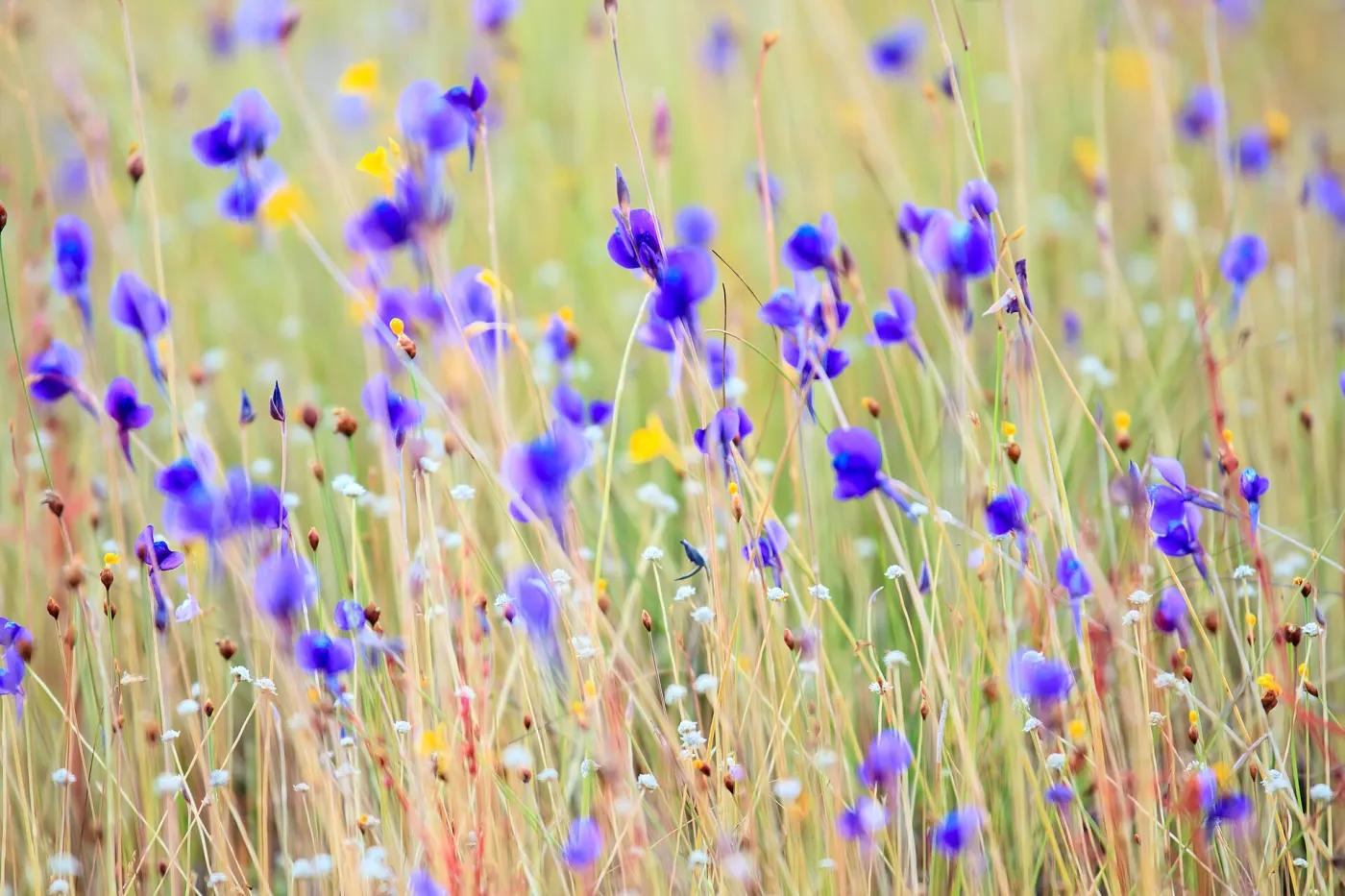
Pha Taem is a line of tall sandstone cliffs facing down onto the Mekong River. On top of the cliffs is a broad rock plain where the topsoil is so thin that large trees cannot grow. At the end of the rainy season, water collects in the cracks of the rock, and tiny annual plants sprout and flower all at once in carpets. When the blooming is at its peak, locals often point to the area near Soi Sawan Waterfall, which is in the same national park.
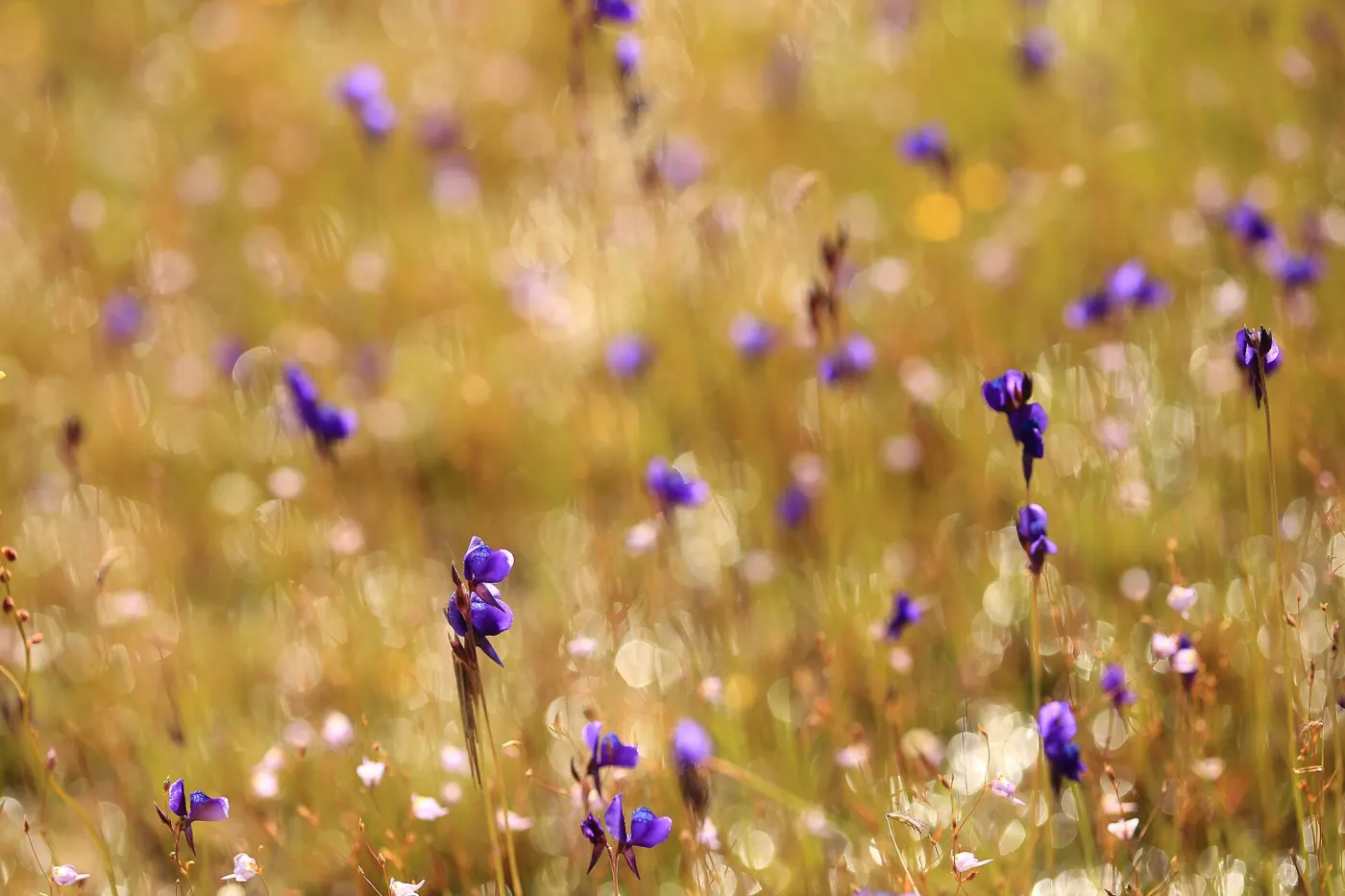
The flowers you will see most often include the yellow Soi Suwanna, the purple Dusita, Thip Kesorn and the small white clusters of Manee Thewa. Each flower is smaller than a fingertip, so you need to bend down close to see the details, but from a distance they look like bands of color painted across the brown rock.
Which Months Are Best for Blooms
- Early October: The rain has just eased and the rock plain is still damp. Flowers start appearing gradually, and some spots are still sparse.
- Late October to November: Many people say this is when the colors are densest. Mornings start to turn cool.
- December: The cool winds are in full force. Flowers begin to fade in spots that dry out quickly, but you can still see them in rock crevices that hold moisture.
Rainfall varies from year to year, so the peak can shift. Before you go, call the Pha Taem National Park office to ask how far the blooming has progressed that year.
Getting from Ubon City to Khong Chiam
Most visitors from Bangkok fly into Ubon Ratchathani Airport or take the lower northeastern rail line to Ubon Ratchathani Station in Warin Chamrap District. From there you need your own transport, because the flower viewing spots are spread across the national park, where public buses do not go.
- The popular route is to leave the city toward Phibun Mangsahan District, then turn off for Khong Chiam. The drive takes about 1 and a half to 2 hours depending on your stops.
- From Khong Chiam town it is not far up to Pha Taem, on paved roads all the way with clear signs.
- If you are coming as a family or group of friends, renting a van with a driver means you do not have to find the way yourselves and can stop at several places in one day.
2-Day, 1-Night Itinerary
Day 1: Khong Chiam, Pha Taem and the Flower Fields
Leave the city early and stop to see the Two-Colored River at Khong Chiam, where the Mun River meets the Mekong. At the end of the rainy season, you can clearly see the different colors of the two rivers. Then head up to Pha Taem, walk along to see the ancient rock paintings on the cliff face, and continue to the rock plains where the wildflowers grow.
The afternoon sun is harsh, so stop for lunch or go to see Sao Chaliang, mushroom-shaped rock formations not far away, then return to the rock plain once the sun softens. The low evening light makes the purple and yellow flowers look much more vivid.
Spend the first night in Khong Chiam, which has riverside resorts on the Mekong as well as small guesthouses in town. November is the tourist season, and rooms fill up fast on long holiday weekends, so book in advance.
Day 2: Na Chaluai and Huai Luang Waterfall
If you want to see the first sunrise in Thailand, Pha Taem is the most popular spot, but you need to leave your accommodation before dawn. Then come back for breakfast and drive south to Na Chaluai District, home of Phu Chong Na Yoi National Park.
The highlight here is Huai Luang Waterfall, which locals call Bak Tew Waterfall. The water drops from a high cliff into a pool below. From the end of the rainy season into early winter, the flow is still strong and the surrounding forest is still green, making it the most photogenic time of the year.
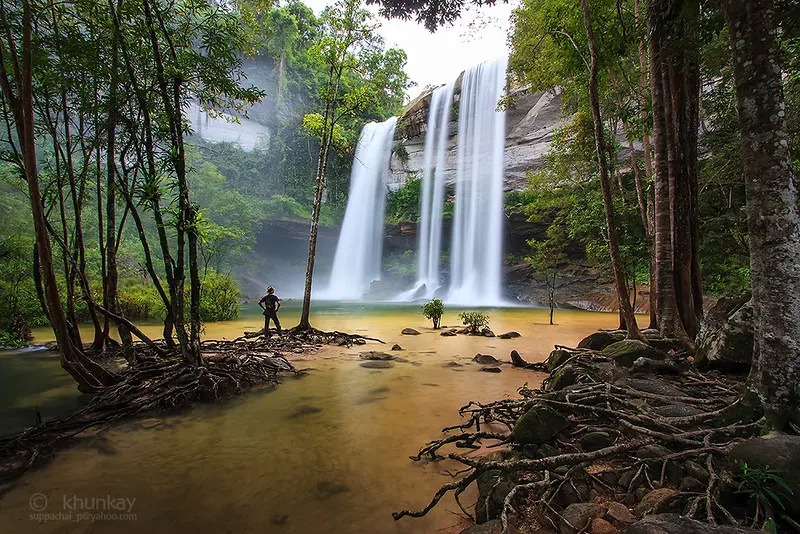
The path down to the waterfall is a long staircase: easy going down, fairly tiring coming back up. Older travelers should allow time to rest along the way. Afterward, drive back to Ubon city, about 2 hours, in time for an evening flight or the train home.
What to Know Before Stepping onto the Rock Plain
- Stay on the paths set by the park. The wildflowers cling to a thin layer of soil, and a single step can kill them. Do not pick the flowers or sit on them for photos.
- Grippy rubber-soled shoes: Rock covered in moss or standing water is very slippery, and sandals are not suitable.
- Hat, umbrella, sunscreen and drinking water: There is no shade on the rock plain, and the midday sun is strong even in the cool season.
- A light jacket: At dawn on the cliffs, the wind is strong and it is colder than in town.
- Park entry fees: National parks charge entry fees at the rates set by the Department of National Parks. Check the current rates before you travel.
Food and Culture Along the Way
Ubon is in the lower northeast of Thailand. Roadside restaurants around Khong Chiam offer grilled Mekong river fish, som tam, sticky rice and larb. If you have time in the city, try Ubon-style khao piak sen noodle soup for breakfast. Most locals speak the Isan dialect but everyone understands Central Thai, and a smile goes a long way.
When visiting temples or the rock painting sites, dress modestly and do not climb on or touch the rock walls, because the paintings are thousands of years old and easily damaged.
Continuing into Laos
Look across the Mekong from Pha Taem and you are looking at Laos. Travelers with time to spare often extend the trip into southern Laos through the Chong Mek border checkpoint in Sirindhorn District to Pakse, then up to the Bolaven Plateau with its waterfalls and coffee plantations, or down to Si Phan Don on the Mekong. You cross the border with a passport. Requirements for documents and vehicles crossing the border can change, so always check with the checkpoint before you set off.
The Plan in Brief
- When to go: Late October to November (can extend into December)
- Base: Khong Chiam District, 1 night
- Route: Ubon city to Khong Chiam, to Pha Taem and the flower fields, to Na Chaluai and Huai Luang Waterfall, then back to the city
- Transport: Private car or a rented van with driver
Read about Ubon's wildflower fields on our main website at Wildflower Fields of Ubon Ratchathani. If you would like a private Ubon trip with See You Again or help arranging a car to take you around, chat with us on LINE at 004207289999999 or call 083 035 9755.
Cover photo: Khunkay / Wikimedia Commons (CC BY-SA 3.0)